Professor Ronan McCarthy receives Global 3Rs Award for model that could reduce use of mammals in burn wound research
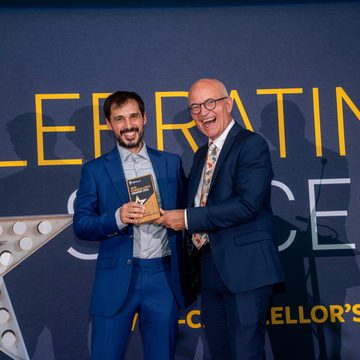
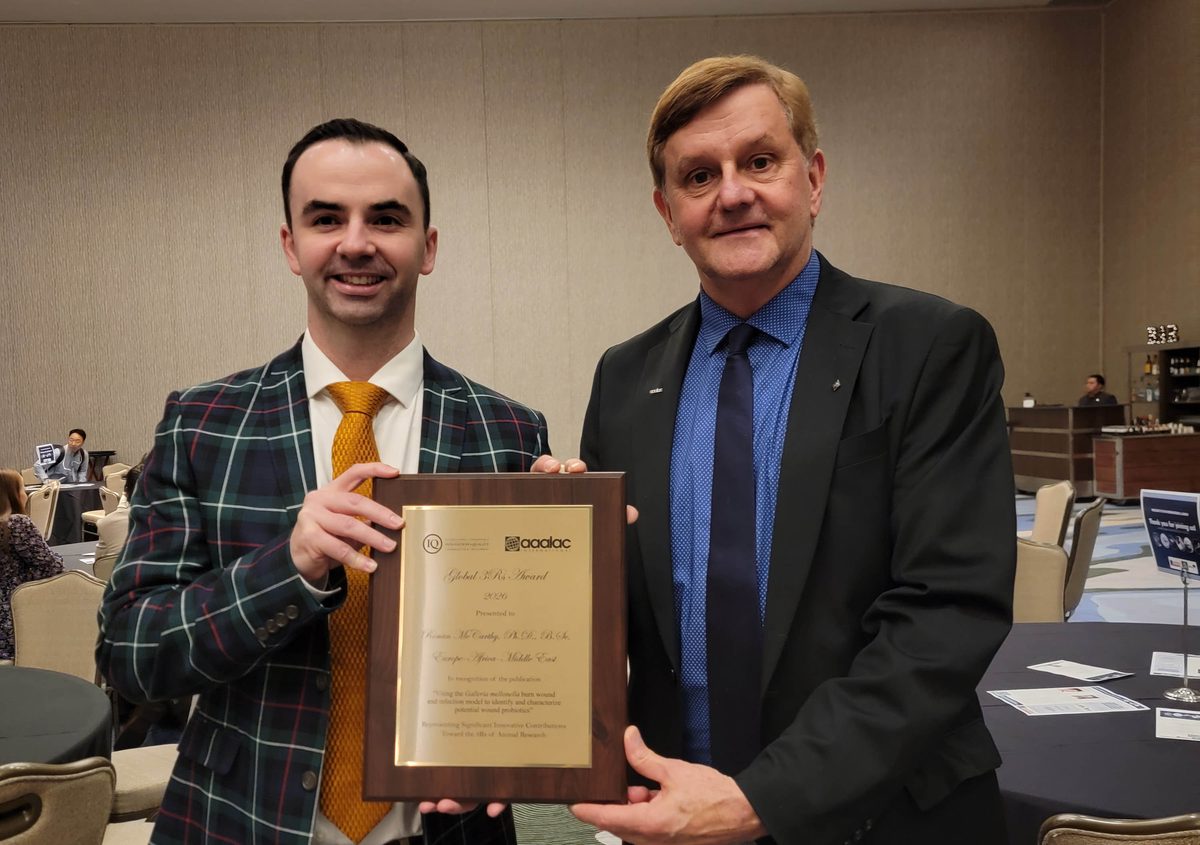
Professor Ronan McCarthy (School of Biological Sciences) has received a Global 3Rs Award in recognition of his team’s development of an insect-based model that could help reduce the use of mice and other mammals in burn wound research.
The Global 3Rs Awards recognise innovative research that advances the replacement, reduction or refinement of animal use in research.
Presented by AAALAC International, a non-profit organisation focused on animal welfare in science and education, the awards recognise research papers that make a significant contribution to the 3Rs. Up to four Global awards are presented each year, with each award including a $10,000 prize.
Ronan attended the awards ceremony in Houston, USA, on 28 October.
A new way to study burn wound infections
The award recognises research published in Microbiology exploring the use of the wax moth Galleria mellonella as a model for studying burn wound infections and testing potential treatments.
Infection is a major risk for people with burn wounds, particularly as some of the most common bacteria are resistant to existing antibiotics. One potential alternative is to introduce beneficial probiotic bacteria into the wound to help prevent infection.
However, due to the complexity of burn wound infection, developing and testing new treatments requires researchers to understand how the infection behaves within a living organism. Traditionally, this has involved mice or other mammals.
“This gives us a really important tool to reduce and refine the use of mice and other mammals in burns research.”
professor ronan mccarthy
Ronan and his team have shown that Galleria mellonella larvae can reproduce important features of burn wound infections. This means they could provide an alternative to mammals for some stages of research, particularly when researchers need to screen large numbers of potential treatments.

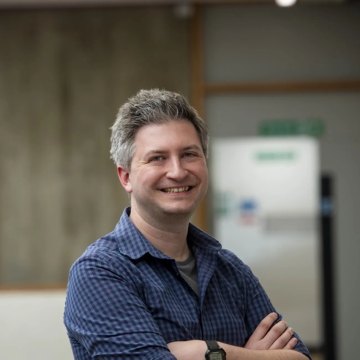
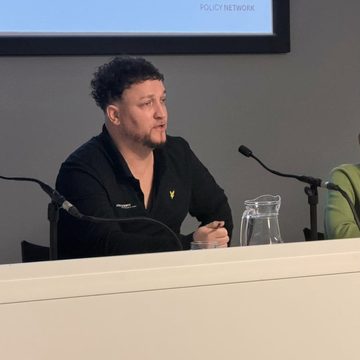
Ronan (pictured left) said: “Burn wound research involving animals has the potential to cause significant suffering, so there are understandably strict ethical controls around this work and the number of animals that can be used.
“Using Galleria provides an alternative. It is also easier and less expensive to work with, requiring less specialist training and fewer resources than maintaining and monitoring mammals over days or weeks.”
The model is particularly useful during the early stages of research, when many potential treatments may need to be trialled and compared to identify the most effective approaches.
“If you want to test 100 probiotic species of bacteria, you can do that using the insect model, whereas you would never get ethical approval for those numbers using mammals,” Ronan said.
“This gives us a really important tool to reduce and refine the use of mice and other mammals in burns research.”
The model is already being used internationally, with Ronan and his team providing training to research groups in the USA, Australia, Brazil and across Europe.
The work has also received support from the National Centre for the Replacement, Refinement and Reduction of Animals in Research (NC3Rs), which has funded a PhD studentship to help progress the research.
Developing the model further
The team is now working to build on the model and improve understanding of how burn wound infections develop. This includes investigating how organisms respond to infection at a genetic level and using imaging to study how bacteria colonise a burn wound and spread into the circulatory system.
Ronan said: “It has been a massive team effort, and it is a great honour to see the model recognised for its value to the research community and its potential to help drive burn wound research forward.”