School children visit Health Sciences for hands-on learning experience
The School of Health Sciences welcomed 90 pupils from Highfield Primary School to the Nightingale Building for a vibrant, hands‑on learning experience. As part of a simulated placement in Children’s Nursing, our first‑year students designed and delivered a series of interactive teaching sessions aimed at building children’s understanding of health and wellbeing.
This initiative reflected the University of Southampton’s commitment to community partnerships, service‑user involvement, and educational innovation. By bringing children onto campus, a unique practical environment was created where student nurses could strengthen their communication skills, practice child‑centred teaching, and gain confidence in engaging with young children.
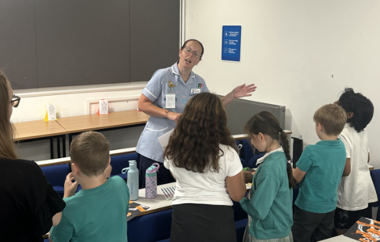
Student-led teaching in action
Children aged 7–9 took part in a wide range of activities, all planned and delivered by the first-year nursing students. Topics included:
- First aid
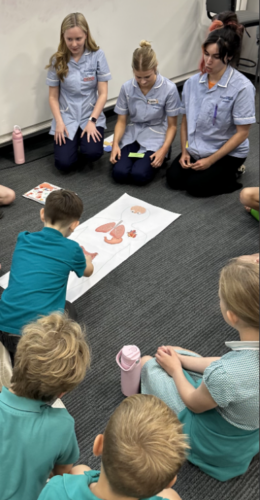
- Learning about the inner working of the body
- Sun safety
- Road safety
- Heart rate influences
- Supporting someone with asthma or nut allergies
The sessions were imaginative, evidence‑based and highly interactive. Highlights included asthma bingo, practising safe use of an EpiPen, creating sun‑safety hats, building a body map, and taking part in energetic activities such as jogging and throwing to explore heart rate changes
Impact on student learning
Reflecting on the experience, our student nurses reported:
- Increasing confidence interacting with children
- Improved ability to adapt health explanations to different developmental levels
- Enhanced child-centred communication skills that will transfer into practice settings
These insights are central to our values as a University and as a provider of excellent nursing education: preparing compassionate and skilled children’s nurses who can communicate effectively and deliver care that is responsive to the needs of children and families.
A true community partnership
School staff shared that pupils loved their time on campus, describing the activities as informative, well pitched, and highly engaging. The partnership was celebrated as a meaningful opportunity for children to learn about health in a fun, supportive environment.
This collaborative project demonstrated our commitment to embedding service‑user involvement in our nursing education and strengthening our community connections. This was achieved through building on established service-user networks to ensure our nursing curriculum remains grounded in real experiences, real voices, and real impact.
Written by Sarah Reed, Service-User Champion, School of Health Sciences