
Could new rapid tests help reduce unnecessary antibiotic use?
When a seriously unwell patient arrives at hospital with a respiratory illness, doctors often have to make treatment decisions quickly.
The infection might be viral, meaning antibiotics will not help. But with the possibility of a bacterial infection or sepsis, clinicians may prescribe them as a precaution.
Researchers at Southampton are investigating whether a new generation of rapid diagnostic tests could give doctors the confidence to avoid prescribing antibiotics when they are not needed.
“Unnecessary antibiotic use is a key driver of antimicrobial resistance,” says Professor Tristan Clark, Professor of Infectious Diseases. “If we can safely reduce unnecessary antibiotic use, we have a chance of reducing the development of resistance.”
Tristan and Dr Nathan Brendish, Senior Clinical Lecturer, are part of a wider team evaluating tests that measure how a patient’s immune system responds to infection. Bringing together clinical and non-clinical researchers, PhD students and colleagues across the Faculty of Medicine and NIHR Biomedical Research Centre: Southampton, their research aims to support safer, more targeted antibiotic prescribing.
A difficult decision for clinicians
Antibiotics treat bacterial infections but do not work against viruses. Yet distinguishing between the two when a patient first arrives can be difficult.
Doctors must therefore balance avoiding unnecessary antibiotics with the risk of missing a serious bacterial infection or sepsis.
“Even if a doctor thinks somebody probably has a viral infection and does not need antibiotics, they will often prescribe them just in case,” Tristan explains.
“We need tests that are fast enough to influence that decision and accurate enough to reassure clinicians that it is safe to withhold antibiotics.”
Reducing unnecessary use matters because antibiotics contribute to the spread of resistant bacteria, making infections more difficult to treat.
But the aim is not simply to prescribe fewer antibiotics. It is to give clinicians better evidence to provide the right treatment to the right patient at the right time.
Looking at the patient’s immune response
Established diagnostic tests work by detecting a specific pathogen, such as influenza or respiratory syncytial virus (RSV). But detecting a virus does not necessarily rule out a simultaneous bacterial infection, and testing for every possible respiratory virus is impractical.
The technologies being evaluated in Southampton instead examine biomarkers in a patient’s blood to determine whether their immune response is more consistent with a viral or bacterial infection.
“You cannot easily test for every single virus,” says Nathan. “These newer tests look at what the patient’s body is responding to instead.
“If a test can show that the immune system is fighting a viral infection rather than a bacterial one, that could give a clinician the confidence not to prescribe antibiotics.”
Equally, a result showing that the immune system is fighting a bacterial infection could support prompt antibiotic treatment.
Finding the best-performing test
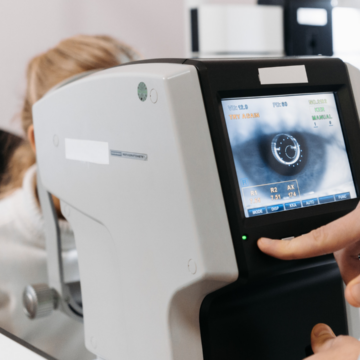
The team is now completing a diagnostic accuracy study involving 500 patients with acute respiratory illness; comparing several host-immune response-based technologies to establish which can most accurately distinguish between viral and bacterial infections.
Most tests use blood taken from a vein, but researchers have also evaluated a finger-prick based test that can produce a result in around 10 minutes.
“We are evaluating a variety of tests to see which should be taken forward,” Nathan says. “The decision has to come down to which test provides the best diagnostic accuracy.”
Taking rapid testing into NHS care
From winter 2027, the researchers plan to evaluate the clinical impact of the best-performing technology in a randomised controlled trial involving adults arriving at hospital with acute respiratory illness.
The research will take place in areas including the emergency department, where urgent prescribing decisions are made.
“We are looking at patients where there is just enough uncertainty for somebody to say, ‘You probably have a viral infection, but I’m going to give you antibiotics just in case,’” Nathan says. “That is the unnecessary use we want to eliminate.”
Expected to run over two winter seasons, the trial will examine whether rapid testing changes antibiotic prescribing, whether it is safe and whether it can be incorporated effectively into clinical care.
The work forms part of Tristan’s NIHR Research Professorship and builds on previous Southampton studies exploring how rapid diagnostics can improve treatment decisions.
For Tristan, the prospect of bringing the research back to the bedside is particularly exciting.
“In our previous trials, we have seen the difference that rapid diagnostic results can make to patients,” he says. “For example, during the COVID-19 pandemic, we showed how point-of-care tests improved patient care and reduced hospital acquired infection.”
“I’m really looking forward to finding out in the future trial whether we can make that difference for patients.”