
“Every day is a learning experience”: bringing a microbiologist’s perspective to antimicrobial resistance
For Dr Kordo Saeed, infection affects every field of medicine.
“There is no specialty in medicine, and no area of healthcare, that is immune from infection,” he explains. “As a microbiologist, I will sometimes tease my colleagues by saying that everything is microbiology until proven otherwise.”
Kordo is a clinician specialising in clinical microbiology in the Department of Infection at University Hospital Southampton NHS Foundation Trust. He is also an Honorary Professor in the Faculty of Medicine, with a particular interest in antimicrobial resistance and infection diagnostics.
But treating infections is becoming increasingly difficult. Antimicrobial resistance, commonly known as AMR, occurs when microorganisms such as bacteria, viruses and fungi change over time and stop responding to the medicines used against them. This can make infections more difficult to treat and increase the risk of serious illness and death.
“The bugs are cleverer than us,” says Kordo. “Sometimes you can see the evolution of a bug in front of your eyes. It might be sensitive to an antimicrobial today, but after exposure you come back the next day and see that it has developed resistance.”
A global health challenge that is already here
Around 1.2 million people die each year from infections directly caused by AMR. When deaths associated with AMR are also included, the figure rises to around five million.
“Some people call AMR a slow pandemic, but that upsets me because it isn’t slow and it’s already here,” says Kordo. “It is a serious issue for global health.”
The impact of AMR is not felt equally. Communities without strong healthcare and public health infrastructure, sanitation or access to education can face a much greater burden. Political instability and conflict can compound those challenges and increase the risk of infections, including those associated with AMR.
“Deaths related to AMR often affect populations who are less fortunate than us,” Kordo explains. “These are things we can sometimes take for granted in the UK, but published data show higher mortality rates in places with less developed healthcare and public health infrastructure, including parts of sub-Saharan Africa.”
For Kordo, tackling AMR therefore requires more than developing new medicines. Preventing infection through vaccination, sanitation and good hygiene is crucial. So too is protecting the antimicrobials we already have by helping healthcare professionals make better-informed decisions about when treatment is needed.
Faster answers for clinicians and patients
A major focus of Kordo’s work is improving diagnostic testing so that clinicians can identify infections more accurately and quickly.
“My main work relating to antimicrobial resistance is about providing better diagnostics,” he says. “By better, I mean more accurate, but also much faster.”
Faster results can help clinicians select the most appropriate antimicrobial. Just as importantly, they can provide reassurance when a patient has a different diagnosis and may not need antibiotics at all.
This is particularly important in intensive care, where antimicrobial use is high and treatment decisions often need to be made urgently.
“You need teamwork around diagnostics,” says Kordo. “That includes rapid diagnostics, biomarkers and all the other investigations available to us. We use that information to treat infection, while also making sure we use antimicrobials carefully.”
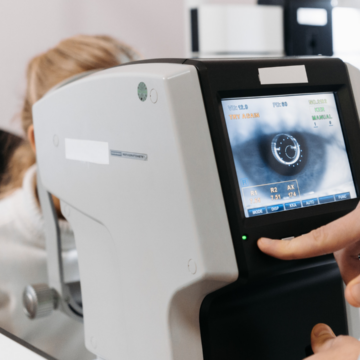
Working with engineering colleagues from the Optoelectronics Research Centre and critical care teams at University Hospital Southampton, Kordo and colleagues are developing rapid point-of-care tests. The aim is to examine several biomarkers from a single blood sample, helping clinicians identify infections, distinguish bacterial infections from viral ones, and recognise when a patient may be deteriorating.
The team is also exploring rapid, cost-effective ways to measure antimicrobial levels in patients’ blood. This could help clinicians avoid giving patients too little or too much of a drug when treating complex infections.
If successful, Kordo hopes these approaches could have an important impact on AMR and patient care, particularly in resource-limited settings.
Diagnostics are only part of the picture. Microbiology teams also carry out surveillance, looking at which microorganisms are circulating, where they are being found and how healthcare teams should respond. Patients transferred to Southampton after receiving hospital care abroad can also be screened for resistant microorganisms, helping teams reduce the risk of these microorganisms spreading within the hospital.
“If you prevent infection, you are less likely to need antibiotics,” Kordo explains. “Surveillance helps us understand which bugs are circulating and how we should deal with them.”
Casting a wider diagnostic net
One of the team’s major areas of innovation over the past two years has been exploring metagenomics to diagnose respiratory infections, including pneumonia, in critically ill patients.
Metagenomics examines the genetic material within a clinical sample to help identify a wide range of microorganisms. Kordo compares the approach with the more familiar technology of PCR testing.
“With PCR, you have a particular target,” he explains. “During COVID, for example, the target was the SARS-CoV-2 virus. It is a little like fishing with a line because you are trying to catch one particular fish. Metagenomics, on the other hand, is more like fishing with a net.”
Rather than searching for one predefined target, metagenomics can detect microbial genetic material from bacteria, viruses, fungi and other microorganisms. The resulting data can indicate which organisms may be present and in what quantities.
However, the technology does not replace clinical expertise. Microbiologists must interpret the findings alongside the patient’s symptoms, medical history and other test results before the multidisciplinary team decides what they mean for treatment.
“As microbiologists, we interpret the information in the clinical context,” says Kordo. “Decisions about treatment are then made by the multidisciplinary team.”
Kordo is supporting the NHS Respiratory Metagenomics Network, led by Guy’s and St Thomas’ NHS Foundation Trust. Southampton is one of seven early adopter sites, with colleagues from the University, the Trust and the NIHR Biomedical Research Centre: Southampton involved locally.
At Southampton, the technology is being explored through both research and service evaluation. This is helping the team understand not only whether it works in the laboratory, but how it could support patient care in real clinical settings.
“You can have very good research that shows something is positive, but translating that into practice can be a real challenge,” says Kordo. “Finding out what works for colleagues in real life is an area that really fascinates me.”
Exploring metagenomics for sepsis and joint infections
Kordo and his colleagues are also investigating whether metagenomics could provide faster answers when an infection is suspected in a patient’s bloodstream.
When a patient shows signs of sepsis, clinicians will often send blood cultures to the microbiology laboratory. Blood cultures may identify an organism within a day or two, but sometimes remain incubated for five days without producing a result.
“A day or two is a long time for a patient with potential sepsis,” says Kordo.
The team is researching whether metagenomic testing could provide useful answers much more quickly. Initial findings are promising, although the research remains at an early stage and requires further refinement and funding.
The next challenge will be to understand the technology’s wider impact, including whether it improves patient outcomes, changes antimicrobial use, helps tackle resistance and provides value across the health system.
In collaboration with colleagues at the University of Southampton and the University of Portsmouth, Kordo is also exploring how information about microorganisms and the patient’s response to them could support the diagnosis of infections in artificial joints.
When someone with a knee or hip replacement develops chronic pain, it can be difficult to determine whether the cause is an infection or a mechanical problem. Conventional cultures from joint fluid may take between 10 and 14 days, while metagenomics could potentially provide answers sooner.
The research asks two important questions: is a microorganism present, and is the patient’s body responding to it in a way that suggests it is causing harm?
“We are trying to individualise the diagnosis for the particular patient, rather than relying on the technology alone,” Kordo explains. “From there, we can give individualised treatment, whether that is surgery, antibiotics or both.”
Supporting better prescribing decisions
Faster laboratory results are one part of better antimicrobial prescribing. Digital decision-support tools can also help clinicians choose the most appropriate treatment.
Hospitals across the UK use apps to access prescribing guidance for common infections such as pneumonia and urinary tract infections. Kordo has been involved in research exploring how decision-support tools could be incorporated into these applications.
Rather than simply presenting a recommended antibiotic, these tools can prompt clinicians to consider factors that may affect the most appropriate treatment. These could include previous MRSA colonisation, diabetes, recent admission to intensive care or recent hospital treatment abroad.
“The idea is not just to give clinicians a guideline to follow,” Kordo explains. “It is to provide friendly decision support that prompts them to ask the relevant questions.”
The MicroGuide I and II studies brought together colleagues from the University of Southampton, the University of Portsmouth and the University of Wales, alongside NHS England and industry collaborators. The studies have concluded, with promising findings that the team hopes to publish.
“I think this could help current and future NHS workers make better decisions around antimicrobial use,” says Kordo. “Who knows? AI could also help to refine these tools in the future.”
Taking antimicrobial education global
Alongside his work in Southampton, Kordo contributes to international action on AMR.
He chairs the Rapid Diagnostics and Biomarker Working Group of the International Society of Antimicrobial Chemotherapy, known as ISAC.
Through ISAC, Kordo has helped deliver educational workshops in Kasese, Uganda, for doctors, nurses, pharmacists and community health teams. The sessions raise awareness of antimicrobial use, resistance and infection prevention.
The most recent workshop expanded its reach to include community members, farmers and teachers, reflecting the need for AMR education to extend beyond hospitals and other healthcare settings.
“We want to promote good education about antimicrobials, antibiotics and infection in primary and secondary schools,” says Kordo. “There is evidence that if you reach people early, you can have a much greater impact later.”
Students can also take what they have learnt back to their families and communities, becoming ambassadors for infection prevention, sanitation, hygiene and the responsible use of antibiotics.
Kordo is also working with Winchester Rotary to introduce AMR into wider global health education, building on the organisation’s support for vaccination and malaria prevention programmes.
Connecting the laboratory with real life
Whether he is examining microorganisms in the laboratory, supporting decisions in intensive care, developing new diagnostics or delivering education internationally, Kordo’s work is grounded in the same principle: tackling AMR requires collaboration.
Microbiologists, clinicians, nurses, pharmacists, laboratory scientists, engineers, researchers and communities all have a role to play in preventing infection and protecting the medicines available to us.
Microbiology provides a vital link between the laboratory and the patient’s bedside. It can help healthcare teams understand how organisms are changing, identify infections more precisely and turn scientific discoveries into better-informed treatment decisions.
“AMR is presenting us with more challenges, so we need to think about other solutions,” says Kordo. “It is about understanding what works in research, but also what works in real life.”
That combination of continuous discovery and practical impact is what makes the field so compelling to him.
“Microbes and antimicrobials are always changing,” he adds. “Every day is a learning experience.”