
Revealing the unequal impact of long COVID
More than four years after the pandemic’s peak, long COVID continues to affect millions of people worldwide. In the UK alone, data from the national GP Patient Survey suggest that around 4% to 5% of the population believe they have experienced the condition.
Yet many questions remain about who is most affected, why some groups face greater risks and whether support is reaching those who need it most.
These questions are at the heart of PhD researcher Mirembe Woodrow’s work on the social inequalities associated with long COVID.
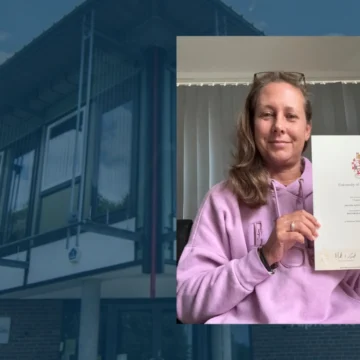
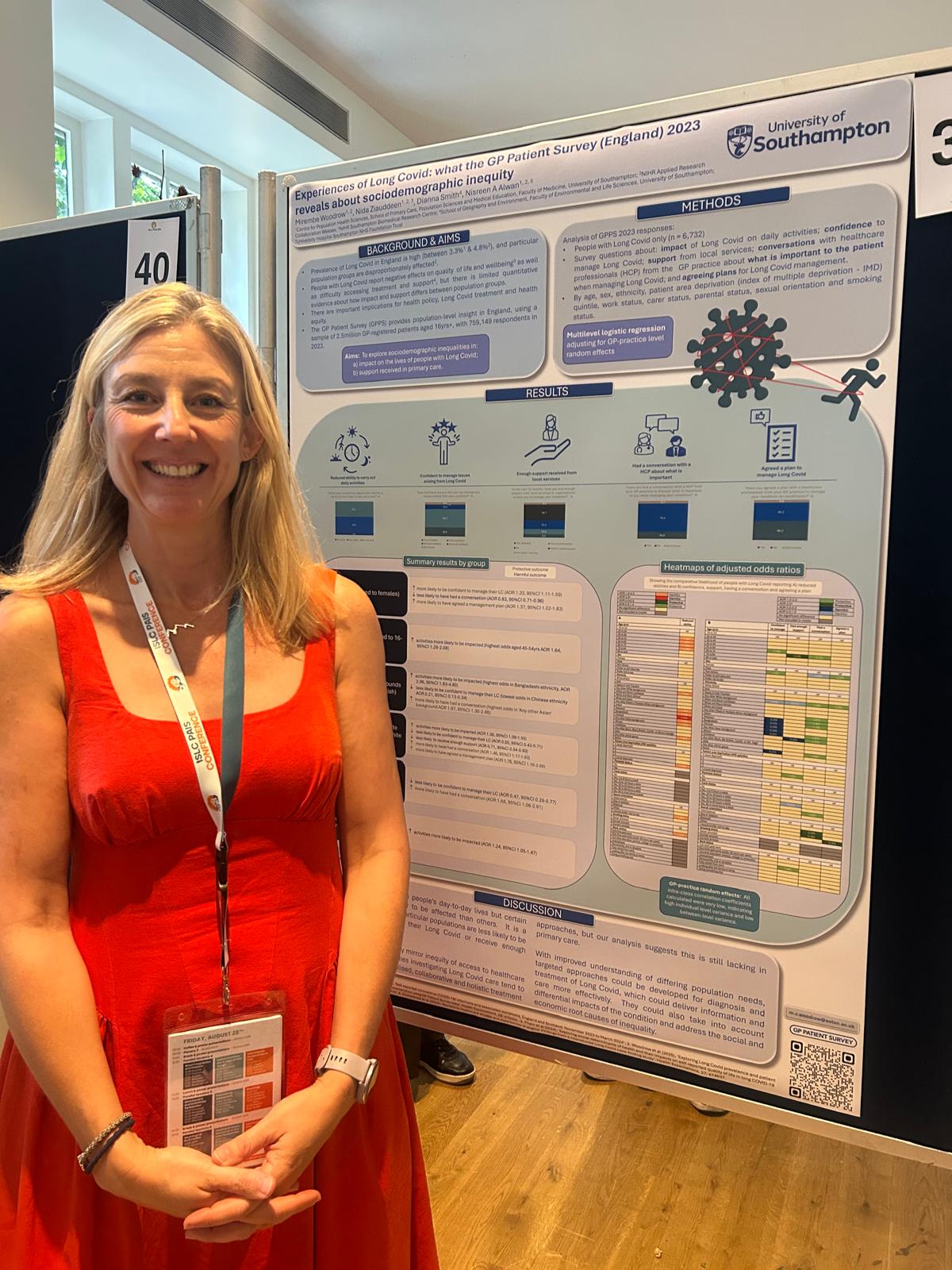
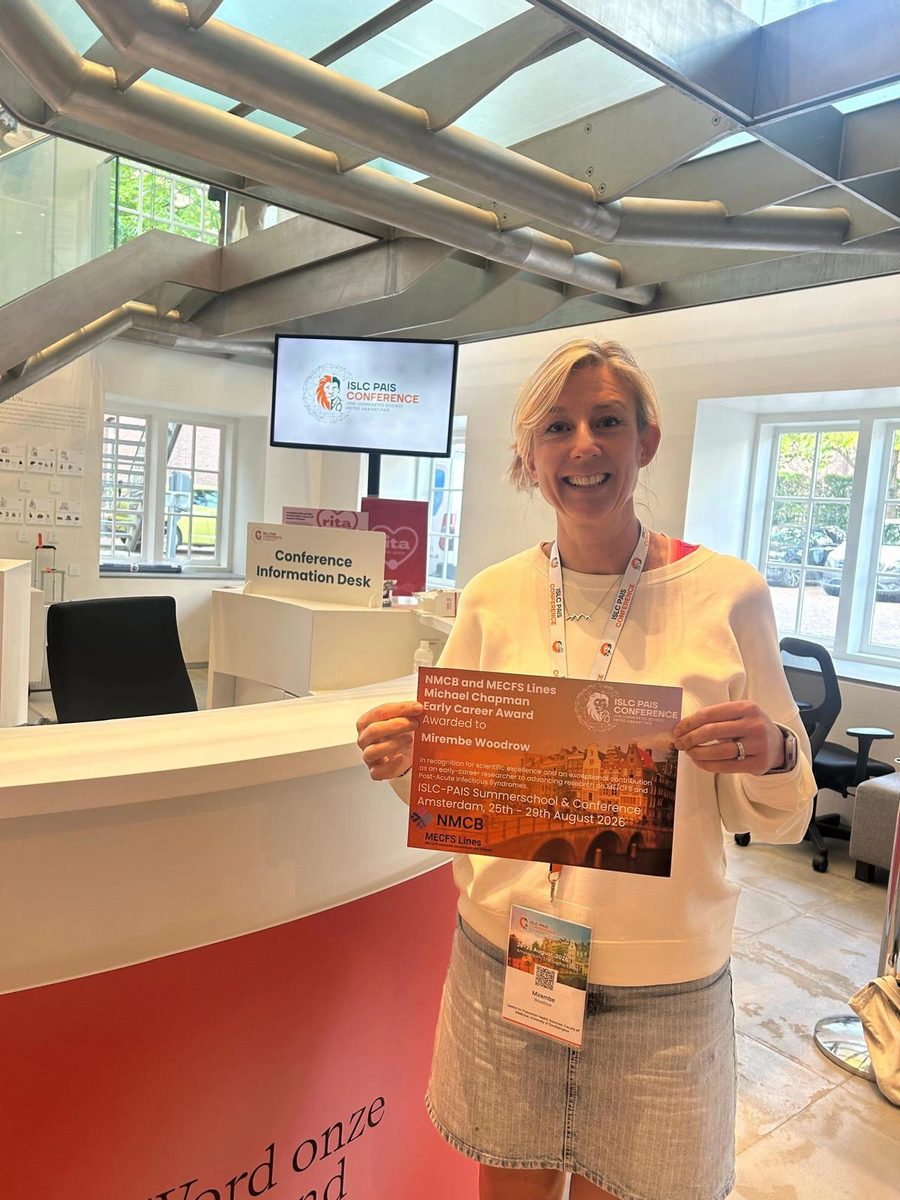
This year, she presented her findings at both the Faculty of Medicine Conference and the International Long COVID and Post-Acute Infection Syndromes Conference in Amsterdam, where her work was recognised with the Michael Chapman Early Career Award.
Drawing on data from the national GP Patient Survey, Mirembe’s research shows how long COVID can reinforce existing health and social inequalities, with disadvantaged communities often experiencing the greatest burden.
“I wouldn’t have been able to do this work without my supervisors: Nisreen Alwan, Nida Ziauddeen and Dianna Smith,” said Mirembe. “Their guidance and input have been invaluable throughout my PhD.”
Understanding a condition that remains difficult to define
Long COVID is generally defined as symptoms that persist for more than 12 weeks after a COVID-19 infection. However, the condition remains challenging to diagnose because symptoms vary widely between individuals and often overlap with those of other illnesses.
While some people experience relatively mild symptoms, others face severe and debilitating effects that can impact their ability to work, care for family members or carry out everyday activities. Common symptoms include fatigue, breathing difficulties and heart palpitations, alongside a range of other physical and mental health problems.
Using data collected through the GP Patient Survey, which first began asking respondents about long COVID in 2022, Mirembe has spent much of her PhD exploring who is affected by the condition and how their experiences differ.
Although around 4% to 5% of respondents report living with long COVID, her research shows that the condition is not evenly distributed across the population.
Long COVID and social disadvantage
One of the clearest patterns to emerge from the research is the relationship between long COVID and deprivation.
People living in the most deprived areas are around twice as likely to report long COVID as those living in the least deprived areas. Around 6% of people in the most deprived communities report having the condition, compared with approximately 3% in the least deprived communities.
The research also highlights differences between other groups. Women are more likely to report long COVID, while working-age adults, carers, parents and people already living with long-term health conditions also appear to be disproportionately affected.
“What we’ve found is that long COVID tends to compound existing disadvantage,” Mirembe explained. “The same groups who often experience poorer health outcomes are also more likely to have long COVID and experience greater challenges accessing support.”
These findings suggest that the condition is not only a health issue but also a social one, with wider implications for equality, employment and access to care.
However, understanding the unequal impact of long COVID is complicated by one of the condition’s defining challenges: securing a diagnosis.
The challenge of getting a diagnosis
A focus of Mirembe’s work examines the uncertainty surrounding long COVID diagnosis.
Unlike many other conditions, there is currently no single test that can confirm whether someone has long COVID. Instead, diagnosis often involves assessing symptoms and ruling out other possible explanations.
This can create a lengthy and frustrating process for patients, many of whom face uncertainty about what is causing their symptoms and how they can access appropriate support.
“There is still a lack of clarity around the condition,” said Mirembe. “It’s often a very long process to get a diagnosis, and there can be a lot of uncertainty for patients along the way.”
The 2023 GP Patient Survey found that 9.1% of respondents were unsure whether they had long COVID, although this proportion varied between population groups.
Stigma can create a further barrier. Some people with long COVID report that others question the legitimacy of their symptoms, which may make it more difficult for them to seek help or discuss their experiences openly. Understanding and addressing long COVID stigma is a particular focus of research by two of Mirembe’s supervisors, Professor Nisreen Alwan and Dr Nida Ziauddeen.
Unequal experiences of care
Beyond understanding who develops long COVID, Mirembe’s research also explores how people experience healthcare once they seek support.
Comparing long COVID with conditions such as diabetes and mental health disorders, her work suggests that people with long COVID may not yet be benefiting from a patient-centred approach to care.
People with long COVID are less likely to report having had a conversation with someone at their GP practice about what matters to them when managing their condition, or to have agreed a management plan. This may reflect less structured care pathways and fewer established systems of support.
Although specialist long COVID clinics were introduced during the pandemic, access to services has become more variable over time. Many patients are now referred to different specialists depending on their symptoms, meaning they may need to navigate multiple parts of the healthcare system.
“For many people, support becomes fragmented because they may be dealing with several symptoms at once,” Mirembe explained. “That can make navigating the healthcare system particularly challenging.”
Her most recent research focuses on experiences within primary care and seeks to identify which groups face the greatest barriers to accessing support. Early findings suggest that many of the same inequalities seen in the prevalence of long COVID are also reflected in people’s experiences of care.
Lessons for the future
While the findings highlight challenges for people currently living with long COVID, Mirembe believes they also offer valuable lessons for future public health emergencies, with the research pointing to systemic challenges relating to health equity. Primary care services remain under considerable pressure, while the complexity of long COVID continues to present difficulties for diagnosis and treatment.
Improving awareness, supporting prevention measures and developing a better understanding of the condition will all play an important role in addressing these challenges.
“There is a lot we can learn for future pandemics,” said Mirembe. “COVID-19 showed us that new diseases often affect disadvantaged groups most severely. If we can understand those patterns and learn from them now, we can build systems that are better prepared in the future.”
By sharing her findings with researchers and clinicians in Southampton and Amsterdam, Mirembe hopes her work will contribute to a growing understanding of long COVID and help inform more equitable approaches to care.